gROUND BASED CONTROL
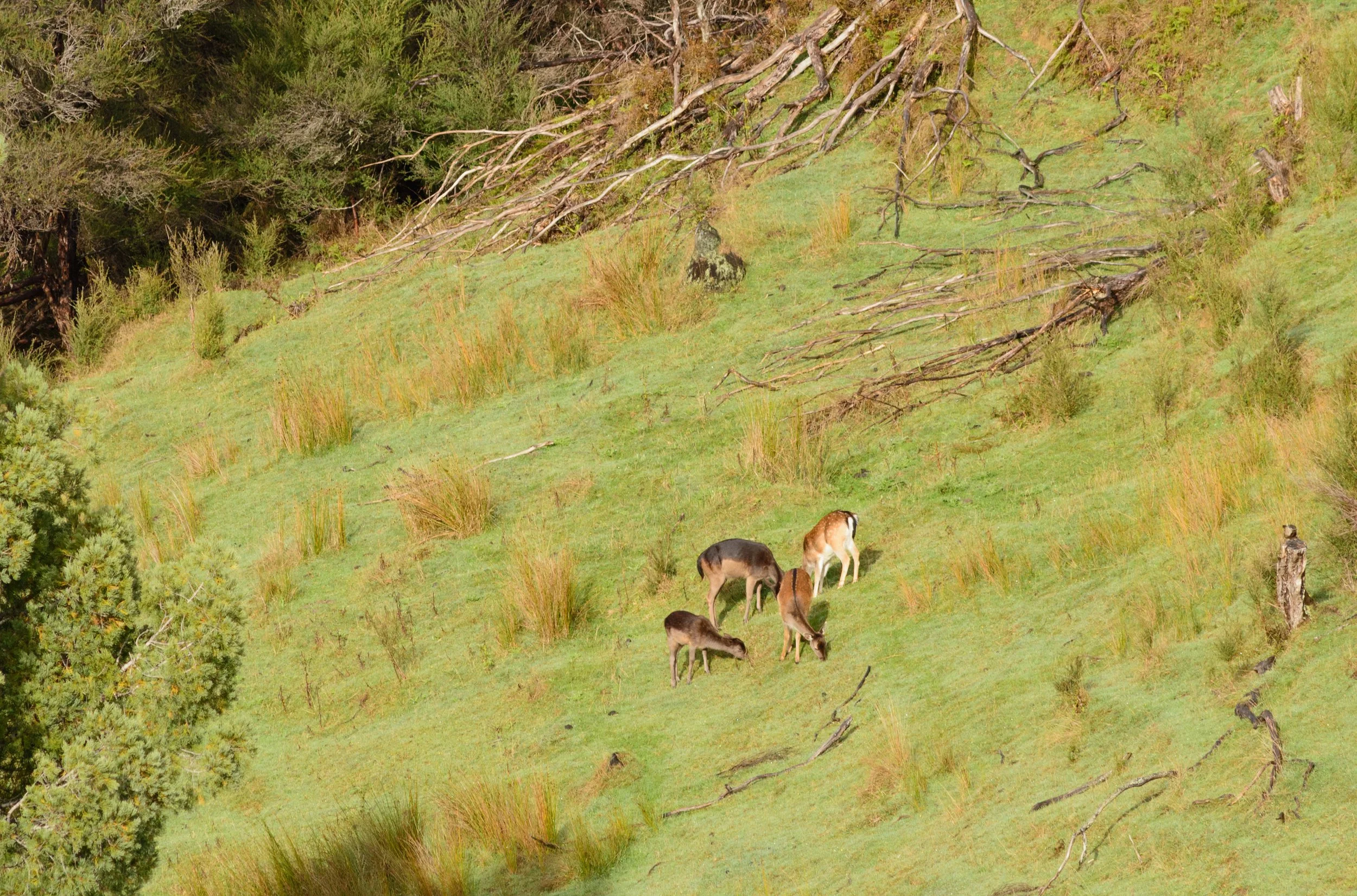
Deer, goats, and pigs cause serious damage to forestry plantings, pasture, and native bush through browsing, rooting, and trampling — and left unchecked, populations build quickly.
target species
-
Feral deer are one of the biggest threats to young forestry blocks and regenerating bush in the lower North Island. Left unchecked, they browse seedlings before they get a chance to establish, strip bark from young trees, and slow canopy regrowth for years. For landowners and forestry managers, that's lost time and lost value.
-
Goats move in herds and work an area hard, stripping vegetation back to bare ground faster than most other species. On steep or erosion-prone country, that browsing pressure has knock-on effects well beyond the immediate area — lost ground cover raises erosion risk on hill country blocks.
-
Pigs cause a different kind of damage: rooting rather than browsing. Torn-up ground, damaged tracks and firebreaks, and disturbed plantings are common wherever a pig population is established. They're mostly active at night, so numbers often build for a while before the damage is obvious during the day.
how we control numbers
We match the method to the animal, the terrain, and how the block is being used:
Drone surveying to establish numbers and movement patterns across large, steep or hard-to-access blocks before committing control effort.
Ground-based culling by experienced operators, working the terrain on foot where that's the most effective approach.
Thermal imaging and night vision for night operations — pigs in particular, but also deer and goats around dawn, dusk and after dark.
The result is control that's targeted rather than guesswork, whether you're dealing with one species or all three on the same block.
We run ground-based culling operations using experienced operators backed by thermal imaging and night vision, allowing us to work effectively at night when these pests are often most active. This means fewer visits, better coverage, and a real reduction in numbers rather than a temporary dent. Suited to forestry blocks, farm boundaries, and larger rural properties, with programmes scaled to the size of the job — from a single clean-up operation to an ongoing control schedule